
The Cooperative Human
We were never meant to do life alone

There is a story we are told about being human.
That beneath the surface, we are selfish creatures.
Competitive. Isolated. Driven mostly by survival of the fittest.
You can feel that story everywhere now.
In the way people rush past one another without looking up.
In the exhaustion of trying to carry life alone.
In communities that have become neighbourhoods of strangers.
In the quiet loneliness that sits beneath constant connection.
We are surrounded by systems that reward extraction over relationship, competition over care, and individual success over collective wellbeing. And after a while, we begin to believe this is simply who we are.
But it is not the full story.
Long before markets, before corporations, before modern nation states, humans survived because we cooperated. We shared food. We cared for children together. We protected one another. We learned through storytelling, reciprocity and trust. Cooperation was not a side note in human history — it was the foundation of it.
Research published in Nature Human Behaviour describes humans as fundamentally “a social species that relies on cooperation to survive and thrive.” The article explores how cooperation sits at the centre of human life, from shared risk and reciprocal care to the social bonds that allow communities to endure hardship together.
That truth feels important to remember right now.
Because many people can feel something is missing.
Not more productivity.
Not more consumption.
Not another app promising connection while deepening isolation.
What is missing is belonging.
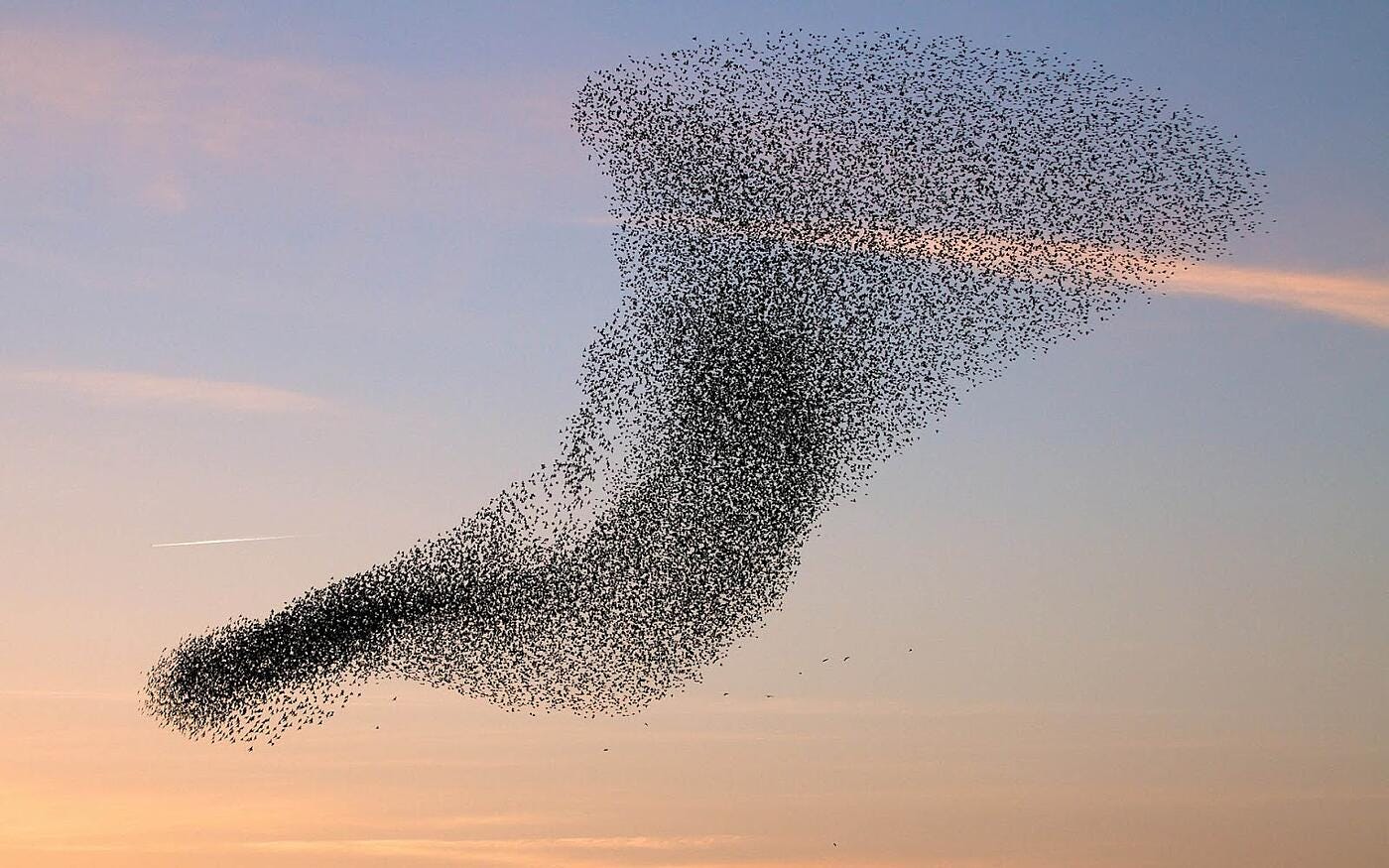
The feeling that your life is woven into something larger than yourself.
That your well-being matters to others.
That you are not carrying the uncertainty of the future alone.
At Yarn and Yield, this is one of the deepest reasons we chose a cooperative structure.
Not because it is trendy.
Not because it is easy.
And certainly not because it is the fastest path.
We chose cooperation because we believe it reflects something ancient and essential about being human.
A cooperative begins with a simple but radical idea:
people can come together to meet shared needs through mutual contribution, shared ownership and collective care.
That changes everything.
In most conventional structures, value flows upward. Decisions are concentrated. People become consumers, workers, followers or audiences. Participation becomes transactional.
But a cooperative asks something different.
What if the people affected by decisions helped shape them?
What if the people creating value shared in it?
What if community was not something marketed to people, but something built by them together?
The cooperative model recognises that resilience does not come from standing above others. It comes from standing with them.
This is deeply human.
Studies of hunter-gatherer societies show that cooperation and social networks were essential to survival, enabling people to distribute risk, share resources and maintain resilience in unpredictable conditions. Even modern research into “risk pooling systems” shows that communities become more resilient when people support one another collectively during uncertain times.
We have seen this ourselves throughout history.
When floods come, people help neighbours before institutions arrive.
When fires burn through communities, strangers cook meals and open homes.
During hardship, people organise food banks, mutual aid networks and community gardens.
Again and again, beneath the noise of division, humans reach toward one another.
Not perfectly.
Not always consistently.
But instinctively.
Even recent studies suggest that cooperation is often humanity’s default orientation when conditions allow trust and reciprocity to emerge.
That matters because trust is not built through slogans.
It is built through shared experience.
Trust grows slowly when people contribute together.
When promises are honoured.
When resources are shared fairly.
When people feel seen, needed and valued.
This is one of the beautiful things about cooperative structures: they create containers for trust to grow.
The international cooperative principles reflect this in practical ways.
Voluntary and open membership reminds us that people should not have to earn their humanity or belonging.
Democratic member control recognises that every voice carries value.
Member economic participation creates shared responsibility and shared stewardship.
Concern for community acknowledges that our wellbeing is inseparable from the wellbeing of others.
These are not just governance mechanisms.
They are social technologies for rebuilding relationship.
And perhaps we need that now more than ever.
Because despite living in one of the most technologically connected periods in human history, many people feel profoundly disconnected.
Disconnected from land.
Disconnected from food.
Disconnected from purpose.
Disconnected from each other.
Loneliness has quietly become one of the defining experiences of modern life.
Yet humans were never designed to thrive in isolation.
We are emotional beings shaped by relationships. Our nervous systems regulate through connection. Our sense of identity forms through belonging. Our resilience strengthens through community.
The more fragmented society becomes, the more cooperation matters.
Not as ideology.
As survival.
When systems become unstable, communities that know how to cooperate adapt better. They share skills. They distribute resources. They reduce risk collectively. They create emotional support networks that no institution can fully replace.
Cooperation becomes a form of resilience.
And resilience is not just practical.
It is emotional.
Spiritual.
Relational.
To know there are people who will stand beside you changes how you move through the world.
This is why mutual aid matters so deeply. Not charity from above, but people supporting one another through shared humanity. Modern mutual aid movements continue this ancient pattern of collective care, especially during crises when formal systems fail to respond quickly enough.
At Yarn and Yield, we believe regeneration begins here.
Not only in soil.
Not only in food systems.
Not only in enterprises.
But in relationships.
A regenerative future cannot be built through extraction and disconnection. It must be built through participation, reciprocity and trust. Through communities willing to care for land, resources and each other together.
This does not mean cooperation is always easy.
It requires patience.
Listening.
Accountability.
Shared responsibility.
It asks us to move beyond the habit of outsourcing everything to distant systems and instead become active participants in the places and communities we inhabit.
That can feel uncomfortable at first because many of us were raised inside systems that taught us to compete before we learned how to collaborate.
But cooperation is like a muscle.
The more we practice it, the stronger it becomes.
And something powerful happens when people begin creating together.
Isolation softens.
Trust grows.
People rediscover agency.
Communities rediscover possibility.
You begin to realise you are not powerless.
That perhaps the future is not something delivered to us by governments, corporations or technologies alone.
Perhaps the future is something cultivated through relationships.
One conversation.
One shared meal.
One working bee.
One contribution.
One act of care at a time.
This is the deeper invitation of a cooperative.
Not simply to join an organisation.
But to participate in rebuilding the social fabric that allows humans to flourish.
Because beneath all the noise telling us to fear one another, compete with one another and isolate from one another, another truth remains quietly alive:
We need each other.
We always have.
And maybe the path forward is not becoming more independent from one another, but learning how to belong to one another again.
If you are local join us for one of our Contributor Days. Care for the land, connect with others and build a co-operative for future generations.